Treat-Dispensing Tumbler Toy: Enrichment for Dogs & Cats
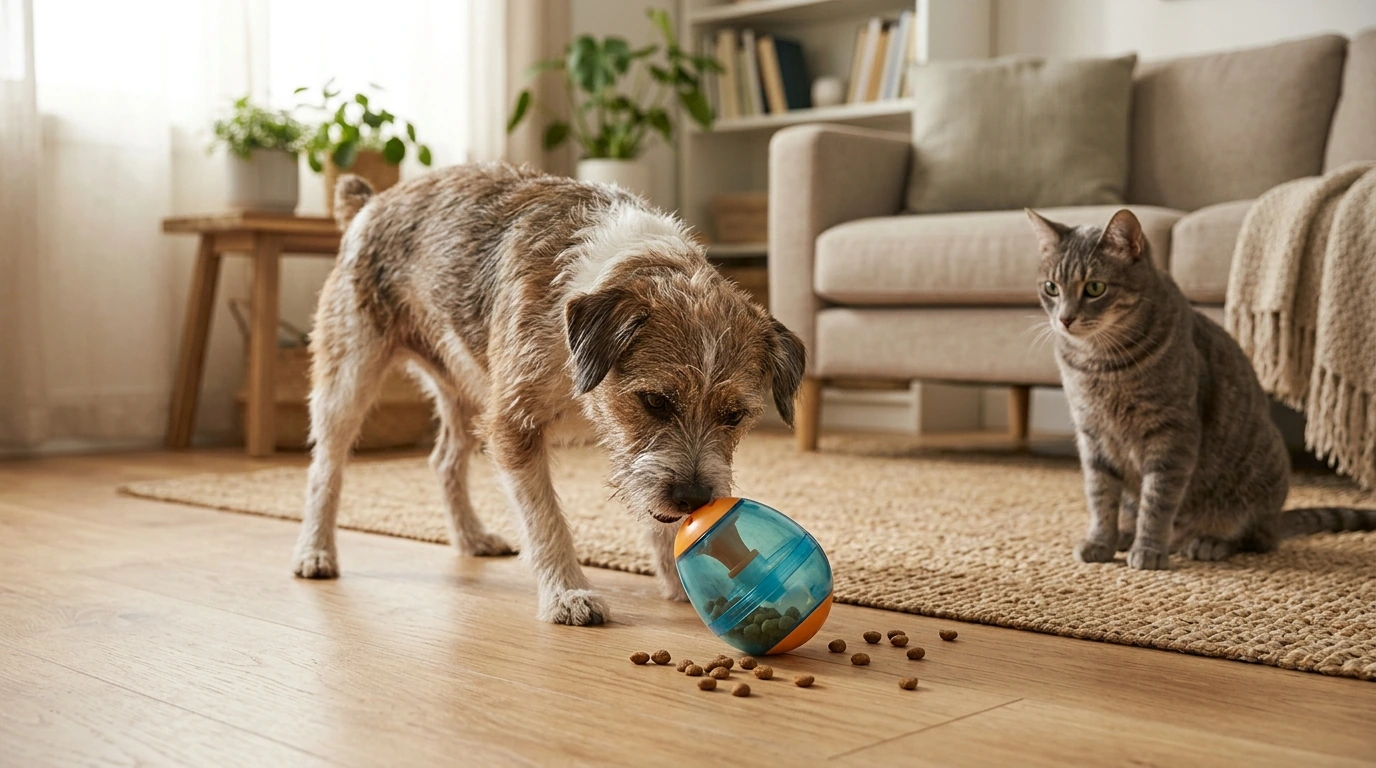
Interactive Treat Dispensing Tumbler Toy for Dogs and Cats
A treat-dispensing tumbler turns snack time into a brain game. As your pet nudges, bats, and rolls the toy, a few pieces of kibble or small treats drop out—rewarding persistence while keeping paws and noses busy. It’s a simple way to add enrichment, slow down fast eaters, and help burn off extra indoor energy without needing you to constantly entertain.
Below is a practical guide to how a tumbler works, which pets benefit most, how to start safely, and easy ways to keep the challenge fun for both dogs and cats.
What a treat-dispensing tumbler does
A tumbler toy dispenses small treats or kibble as it rolls, wobbles, and tips. Your pet learns that interacting with the toy leads to a payoff, creating a satisfying task-and-reward loop that can help redirect boredom into focused play.
- Dispenses small treats or kibble as the toy moves, rewarding problem-solving and persistence.
- Encourages natural foraging and hunting behaviors: nudging, batting, pawing, and nose work.
- Adds gentle indoor activity with minimal human involvement once your pet understands the game.
- Can reduce boredom-driven behaviors by giving pets a clear “job” to do.
Many behavior and welfare organizations emphasize enrichment as a core part of pet care. For more background on why enrichment matters, see the ASPCA’s enrichment guidance and the AKC’s mental stimulation ideas.
When this toy is a great fit (and when it isn’t)
Tumbler toys are a strong match for pets that need more structured stimulation—especially when outdoor time is limited. They can also help turn part of a meal into a slower, more engaging routine.
- Works well for pets that need more enrichment: indoor cats, high-energy dogs, and pets left alone for short periods.
- Useful for pets that eat too quickly; measured kibble can be used as the reward instead of extra treats.
- Not ideal for pets that become frustrated easily; start with easier settings or higher-value rewards.
- Avoid unsupervised use with heavy chewers or pets that may try to bite pieces off—choose monitored sessions and remove if damaged.
- In multi-pet homes, separate sessions can prevent resource guarding and keep the experience positive for everyone.
If your pet is prone to anxiety, guarding, or conflict around food, it can help to review humane training and management basics from the American Veterinary Society of Animal Behavior (AVSAB) and apply them to treat-toy routines (calm setups, no intimidation, and clear separation between pets).
Setup and first-session steps
The first session should be easy enough that your pet “wins” quickly. Early success builds confidence and prevents the toy from becoming frustrating or ignored.
- Choose the reward: small, dry treats or kibble that can tumble freely (avoid sticky, moist, or crumbly foods that clog openings).
- Begin easy: use fewer pieces and the largest opening/least restrictive setting if the toy is adjustable; reward early success.
- Introduce the movement: roll it once or twice so your pet sees and hears treats come out, then let them take over.
- Keep sessions short at first (5–10 minutes) to prevent frustration and preserve novelty.
- Pick the right surface: hard floors usually dispense faster; carpet slows the roll and increases difficulty.
For fast eaters, consider loading part of a measured meal instead of adding extra calories. If you’re using the toy daily, subtract the toy portion from the regular food bowl portion.
Finding the right difficulty for dogs vs. cats
Dogs and cats often “solve” tumblers differently. Dogs commonly push with their nose or pin with paws, while cats may stalk, bat, and wait for the wobble to pay off. Adjusting reward type, surface, and play space can make the toy feel tailored to each species (and each personality).
| Pet type | Best reward format | Surface to start | Signs to increase difficulty | Signs to decrease difficulty |
|---|---|---|---|---|
| Dog | Small dry treats or measured kibble | Hard floor or low-pile rug | Solves too fast, loses interest after quick payout | Whining, pawing without progress, walking away |
| Cat | Small dry treats with strong scent | Hard floor with open space | Bats it once and treats fly out immediately | Startles, ignores it, or watches without engaging |
| Senior pet | Soft-but-dry small pieces (easy to chew) | Non-slip mat on hard floor | Comfortable and consistent success | Hesitation, fatigue, or reduced mobility |
Safety, cleaning, and durability tips
Ways to keep play fresh
Product spotlight: Interactive Treat Dispensing Tumbler Toy for Dogs and Cats
If you want one toy that can work across species, the Interactive Treat Dispensing Tumbler Toy for Dogs and Cats is designed to wobble and roll, releasing treats gradually so play lasts longer than a quick handout.
Helpful add-ons for a well-rounded routine
- Adjustable No-Pull Dog Harness & Leash Set with Reflective Safety Design for more comfortable, controlled walks.
- 95oz Cordless Cat Water Fountain – Battery Powered & Ultra-Quiet Pet Feeder to support steady water intake at home.
FAQ
What treats work best in a treat-dispensing tumbler?
Small, dry treats or kibble that rolls freely tend to work best. Avoid sticky, moist, or very crumbly foods that can smear or clog the opening, and measure portions so treats don’t unintentionally add extra daily calories.
How long should a pet play with a treat-dispensing toy each day?
Most pets do well with short sessions of about 5–15 minutes, adjusted to their motivation and frustration tolerance. End the session if your pet seems stressed or stuck, and account for the treats in the day’s total food intake.
Is a treat-dispensing toy safe for puppies, kittens, or heavy chewers?
It can be safe with supervision, a size-appropriate toy, and frequent checks for cracks or damaged parts. For heavy chewers, avoid leaving the toy out unsupervised and remove it immediately if your pet starts trying to bite pieces off.












Leave a comment